
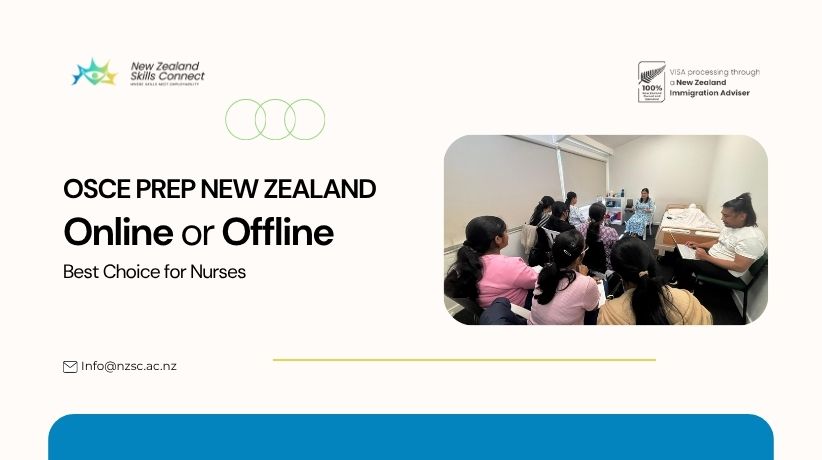
Becoming ready for the OSCE matters deeply when nurses aim to work in New Zealand. While written tests check knowledge, this OSCE exam for nurses watches how you act, speak, and decide during live patient situations. These days, people often feel unsure whether studying online works better than attending physical classes. The method picked shapes not just results but also self-assurance and readiness under pressure.
What if practice felt more real? This guide looks at two ways to train for the OSCE, showing how each shapes your readiness. One fits New Zealand’s demands better – here’s why that difference matters.
Start Your OSCE Journey Today with Expert Training in New Zealand
Get access to structured OSCE training, real-time practice, and personalised guidance designed for international nurses.
👉 Book Your Free Demo Class Now
A single test in New Zealand checks if nurses use their learning correctly when treating patients. More than recalling facts matters – doing each task right, without risk, shows readiness. Starting strong builds trust during care.
Getting ready for the OSCE preparation means knowing how each station works, running through medical tasks, talking clearly with patients, while also staying calm when minutes are short. No matter if your practice happens over the internet or face to face, what matters is growing confidence alongside skill.
Nowadays more nurses pick online courses for OSCE training, particularly if they’re based in India or elsewhere dreaming of working overseas. Because it fits around life, people can study when it suits them best, moving step by step on their terms.
Starting off, clear OSCE study materials help learners grasp hands-on techniques by viewing step-by-step examples, then going over core ideas again and again. When first beginning prep, web-based OSCE certification training offers solid grounding in essential theory before moving forward.
Online OSCE Preparation Advantages
Starting with digital tools makes sense when getting ready for nursing exams. At any hour, trainees open up skill guides online, going through each move carefully. Only after grasping the details do they try actions by hand in real space.
Folks moving from India to New Zealand through OSCE training India to New Zealand pathway find this approach works well – less rushing abroad, yet prep kicks off right away.
Offline OSCE Training New Zealand Matters
Though digital lessons help grasp ideas, hands-on practice turns that knowing into doing. Watching learners work through scenarios in lifelike medical settings defines the OSCE experience.
Practice makes perfect when it comes to medical exams. Real tools, live scenarios, one-on-one feedback – these shape readiness better than screens ever could. New Zealand offers face-to-face OSCE coaching where movements become second nature. Confidence grows not from watching videos, but doing tasks exactly as they’ll happen on test day. Some skills need space, time, presence – things a laptop just can’t give.
Importance of Hands-On Practice
Practice happens face to face, with learners working through tasks like treating injuries, giving medicines, or talking to patients while being watched. Right then, help kicks in – coaches step in during these moments, shaping how trainees respond as things unfold.
When aiming at the best OSCE training for New Zealand nurses, hands-on experience shapes how well nurses do – cutting mistakes under pressure. Real practice slips into muscle memory, making tough moments feel familiar when it counts.
Bridging Theory With Real World Use
What trips up many during OSCE exam preparation isn’t knowing the steps – it’s doing them well when it counts. While digital lessons lay out the theory, real skill builds through practice away from screens. Pressure changes everything; only hands-on rehearsal prepares you for that shift.
Starting smart means mixing online study with face-to-face practice. After using digital tools, test-takers sharpen abilities by joining live workshops. Many find this blend works better than going one way only.
Building Confidence and Communication Skills
Practice makes those parts easier – communication, how you carry yourself, talking with patients. The OSCE exam for nurses checks these, not just tasks. Without doing it for real, most find them tough to get right.
Face-to-face OSCE classes for nurses give nurses a chance to work on how they look, speak, and connect while acting out real situations. Because of this practice, many feel more at ease, moving smoothly when it counts.
Even while you learn remotely, going over material again sticks better when core ideas show up more than once. Still, practicing how to share thoughts clearly gets easier because the main structures come around often.
Preparing Nurses for the OSCE Exam
Step by Step OSCE Preparation for Nurses
To succeed in the New Zealand OSCE, candidates should follow a structured approach:
- Begin with online OSCE study materials to understand concepts
- Use video demonstrations to learn procedures
- Join offline OSCE training for hands-on practice
- Attend mock exams to simulate real conditions
- Take feedback and improve weak areas
A nurse moves through each stage of OSCE preparation like climbing stairs – one foot at a time. Each part builds understanding while sharpening real skills. Learning happens not just in thought but also through doing. The process links knowledge tightly to performance under pressure.
Which OSCE Training Method Works Best?
One way isn’t better than the other when it comes to prepping for nursing OSCE online or in person. Depending on where you are in training, either path might fit – sometimes both play a role.
Not stuck to one place – that’s what makes online study work so well for reviewing ideas. Real practice takes shape when you’re face-to-face, building skill through doing. Confidence grows stronger that way too. Full readiness comes alive only when screen time meets hands-on time. Balance is quiet – but loud in results.
Choosing an OSCE Study Approach
Starting strong on the OSCE means going beyond books. Staying calm while doing tasks matters just as much as knowing them. Those heading into OSCE training New Zealand often find balance by mixing web-based tools with hands-on drills. A blend of both worlds tends to work better than either alone.
Starting out in India or already living in New Zealand, working steadily on OSCE preparation makes it easier to grow the abilities required. Mixing what you study with hands-on experience brings test takers nearer to registering as a nurse there.

Leave a Reply