
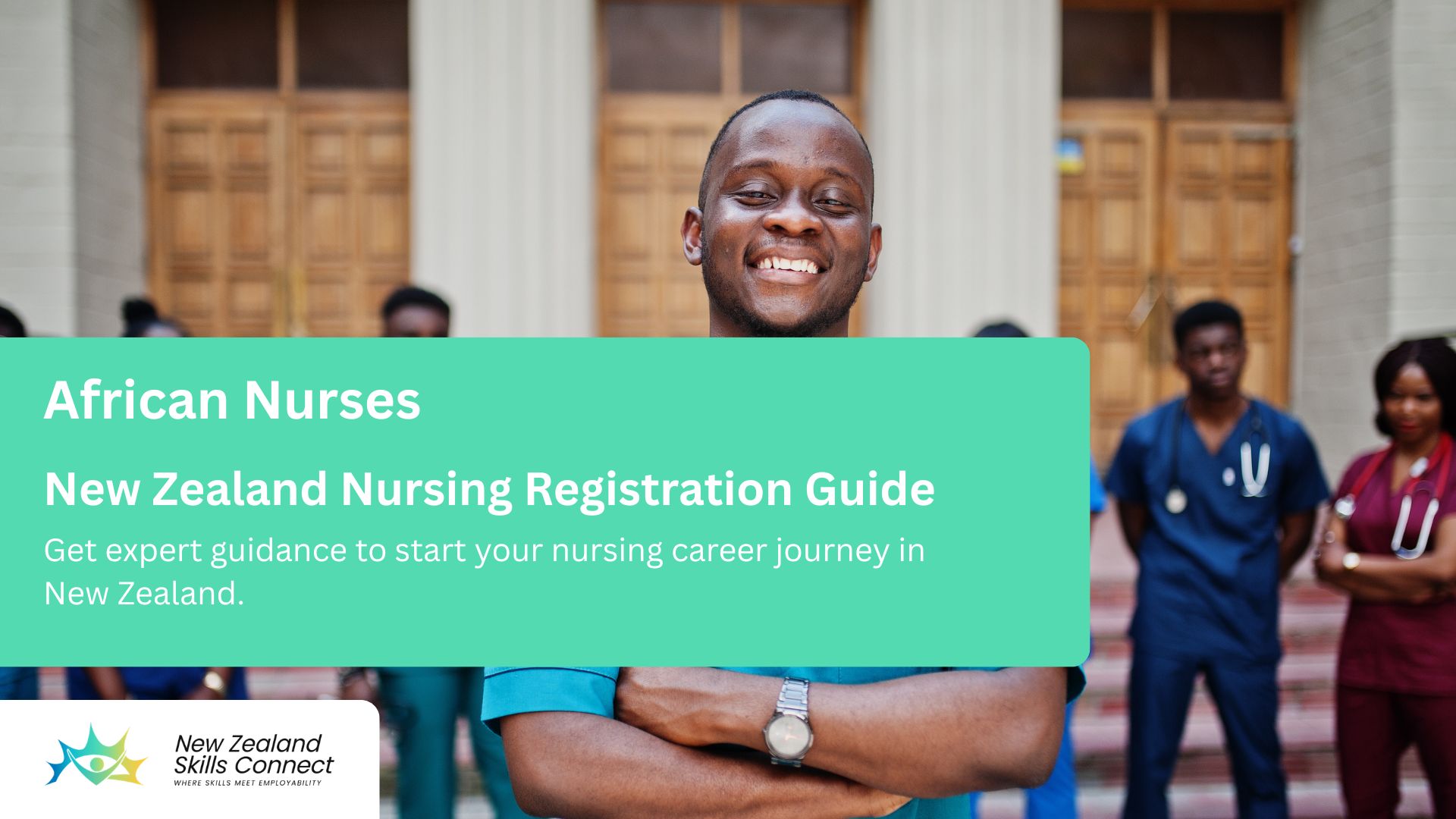
How African Nurses Can Work in New Zealand
African nurses – from Nigeria, Kenya, Ghana, South Africa, Zimbabwe, and beyond – are a vital part of New Zealand’s internationally trained nursing workforce. The pathway is well- established, though it requires preparation.
Step-by-Step Process:
- Confirm your nursing degree is from an NCNZ-recognised or acceptable institution
2. Apply to NCNZ with full academic and registration documentation
3. Demonstrate English proficiency (IELTS or OET)
4. Complete the CAP course
5. Pass the OSCE
6. Obtain NZ nursing registration
7. Secure a job offer and apply for visa
What Are the Requirements for African Nurses in NZ?
- Nursing degree from a recognised institution in your country
- Current registration with your national nursing council
- Minimum clinical experience (2+ years preferred)
- IELTS Academic 7.0 OR OET Grade B
- NCNZ application and fees
- CAP course completion
- OSCE pass
- Police clearance and medical examination
Note for South African nurses: SANC registration is well-regarded by NCNZ and may lead to a more streamlined assessment.
Is OSCE Difficult for African Nurses?
The OSCE is challenging but absolutely achievable. African nurses who struggle most often do so because of:
- Differences in clinical documentation practices
- Unfamiliarity with NZ cultural safety requirements
- Limited access to simulation-based OSCE preparation
With targeted coaching, mock examinations, and study of NZ-specific clinical standards, the vast majority of well-prepared African nurses pass on their first attempt.
How to Pass OSCE Exam First Attempt – Tips for African Nurses
- Understand NZ nursing standards – Read the NCNZ Competency Framework
thoroughly - Join an OSCE prep programme – Preferably one experienced with internationally trained nurses
- Focus on communication – NZ OSCE heavily assesses patient communication, not just technical skills
- Study cultural safety – Maori health, Treaty of Waitangi, and cultural competency are assessed
- Practice in English – Think, speak, and document in clinical English consistently
- Time yourself – OSCE stations are strictly timed; practice under pressure
- Get feedback from mock OSCEs – Identify weaknesses early
NZ Nurse Migration from Nigeria, Kenya, and Ghana
Nigeria: Nigerian nurses trained at accredited institutions are eligible. NCNZ will require
verification from the Nursing and Midwifery Council of Nigeria (NMCN). CAP and OSCE
typically required.
Kenya: Kenya Nursing Council-registered nurses are eligible. English test may be required despite English being widely used. Full CAP pathway is standard.
Ghana: Nurses registered with the Nurses and Midwives Council of Ghana are eligible. Full pathway including CAP and OSCE applies.
South Africa: SANC registration is well-regarded. Some South African nurses may receive abbreviated pathways depending on their assessment.
Affordable OSCE Training for African Nurses
When selecting OSCE coaching:
Post-Brexit, EU nurses no longer have automatic working rights in the UK – making New
Zealand an increasingly attractive option.
- Look for programmes with simulation labs – Physical practice beats theory alone
- Check pass rates – Ask providers for their candidate success rates
- Online vs in-person – Online prep is accessible for those still in Africa; in-person is preferable once in NZ
- Peer networks – Connect with African nurses who have already passed OSCE in NZ via Facebook groups, WhatsApp communities, or nursing forums
UNIVERSAL GUIDE: OSCE New Zealand- Everything You Need to Know
What Is the OSCE in New Zealand?
The Objective Structured Clinical Examination (OSCE) is the practical competency assessment used by NCNZ to confirm that internationally qualified nurses can safely practise in the New Zealand healthcare system.
It consists of multiple timed clinical stations, each assessing a different area of nursing practice.
OSCE Stations Typically Cover:
- Patient assessment and clinical observation
- Medication administration and calculation
- Clinical handover (SBAR)
- Wound care and infection control
- Emergency response
- Communication with patients and families
- Cultural safety and ethical practice
- Documentation
Passing the OSCE – Universal Tips
- Prepare for NZ – specific clinical culture – not just universal nursing skills
- Learn the Treaty of Waitangi and cultural safety – this appears across multiple stations
- Practice SBAR handover – fluency is essential
- Understand NZ medication naming – drug names may differ from your home country
- Enrol in a reputable OSCE prep course – self-study alone is rarely sufficient
- Complete multiple mock examinations – aim for at least 3-5 full mock OSCEs before your exam date
Final Word: Starting Your New Zealand Nursing Journey
New Zealand is one of the most rewarding countries in the world to build a nursing career. The healthcare system values nurses highly, the work culture promotes wellbeing, and the pathway to permanent residency is achievable.
No matter where you are coming from – Philippines, Sri Lanka, the Gulf, UK, Canada, Europe, or Africa – the process is similar:
Qualify>English Test >NCNZ Assessment > CAP >OSCE > Register > Work > Thrive
The key is to start early, prepare thoroughly, and get the right support for your OSCE and CAPjourney.

Leave a Reply